
The North Oropouche Water Treatment Plant in Valencia is a cornerstone of Northeast Trinidad’s public utility infrastructure. First established in 1979 with an initial production capacity of 10 million gallons per day (mgd), the facility has grown to a nominal capacity of 20 mgd, distributing treated water to more than 180,000 residents across Sangre Grande, Arima, and Maloney.
SUBHEADING: A community without water
Yet, a stark irony defines the very road leading to the facility. This street has become home to a vibrant, tight-knit community of over 200 people. Despite living on the doorstep of the region’s primary water treatment facility, not a single resident has access to a pipe-borne water supply. Complicating their long-standing struggle for basic utility connections, the settlement sits on state-owned land, where residents lack formal legal tenure or permission to reside.
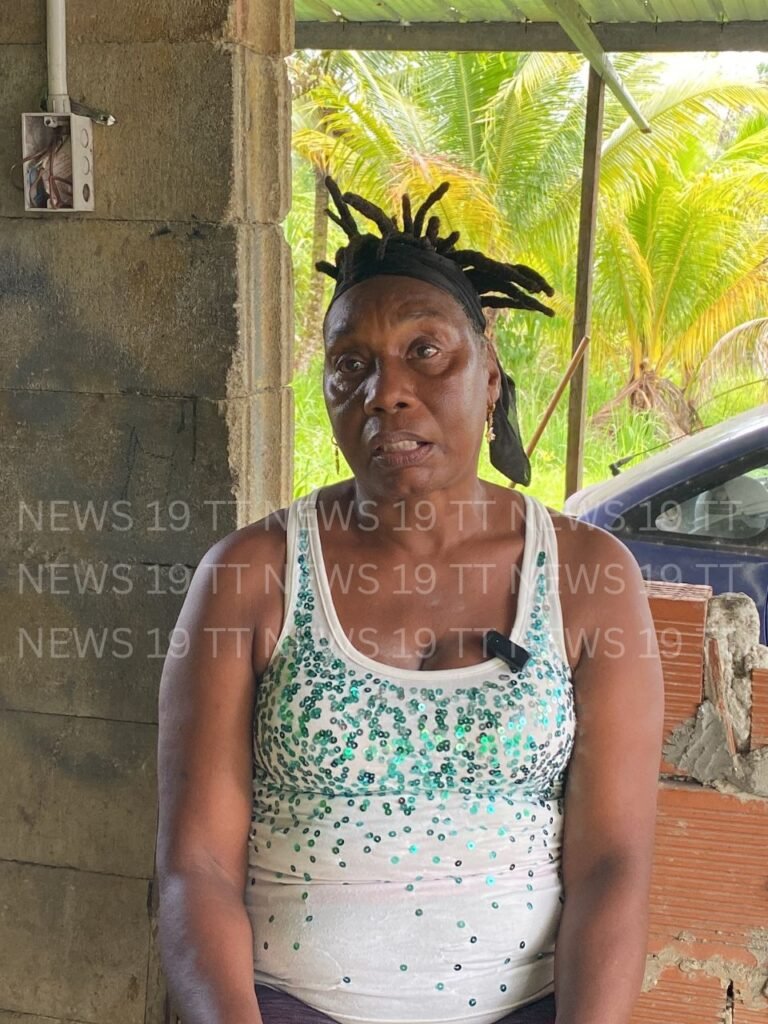
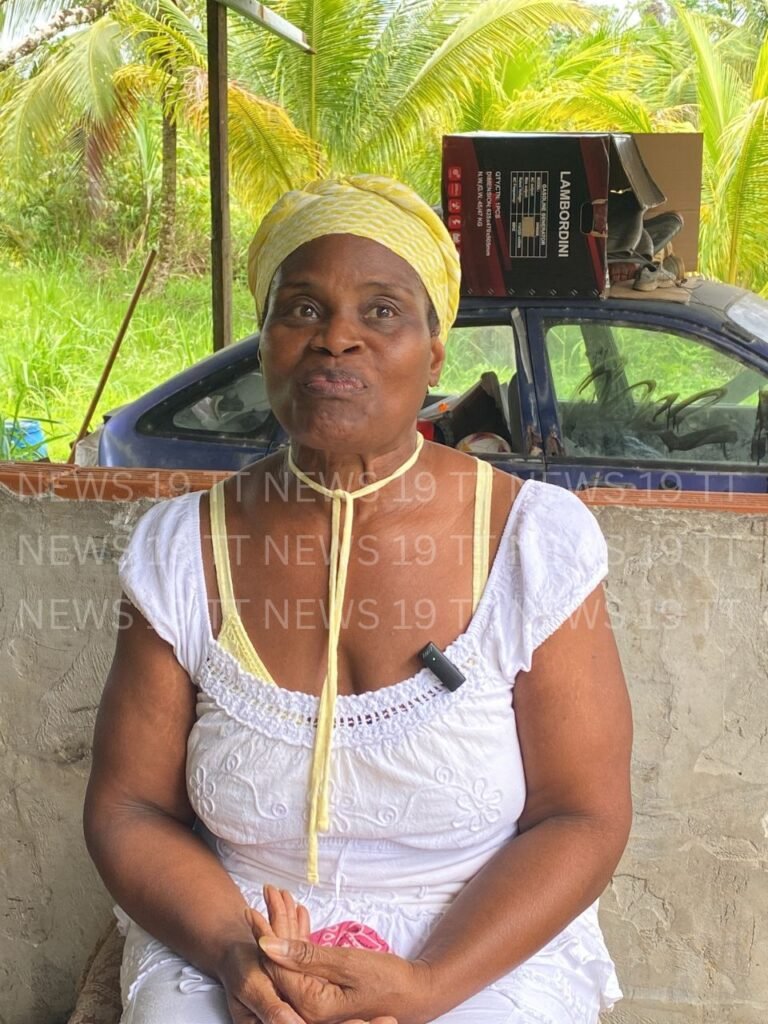
In an interview with News 19 TT on August 15, Nerida Nelson, who has been living in the community since the late 1990s, said she started advocating for utilities to be brought into the community around 2011.
You can read about their fight for electricity here: https://news19tt.com/north-oropouche-wasa-road-no-electricity-part-one/
In that same year, then-WASA CEO Ganga Singh led a “fact-finding” walk along the North Oropouche Trunk Main, a 42-inch pipeline serving around 100,000 residents from Sangre Grande to Five Rivers, Arouca, to highlight threats to the water source. Singh identified squatting, illegal quarrying and illegal connections along the pipeline corridor as major risks to the system’s sustainability. He also revealed a legal gap dating back to WASA’s 1965 founding act, the authority’s lands had never been formally delineated, even though ownership was legally vested in WASA. In response, Singh said WASA would begin fencing its properties and asserting legal ownership to stop further encroachment.
“It approved…no water”
That same year, Nelson’s community group began its own advocacy for a water connection, sitting on state land WASA itself was working to reclaim.
She said the group visited WASA several times, until they were told the community had been approved for a supply.
“They tell us the water approve, because we went down in the (WASA) head office, they tell us it approve,” she recalled.
“They come up here, they used the words, ‘It approved’, no water.”
Now 76, Nelson said she could not remember the exact dates of those meetings but in the years since, she’s held on to the promises made to the group.
“We go to a next meeting concerning that and they say they say the only place we could get connection from, is in Hollis (Reservoir), when I find we have a place up here, they could run an extra for us.”
But Nelson said although they were given verbal assurances, nothing has happened since.
“Nothing at all, if you ent get rain, you have see some place where you could go out and get some water.
“All over Trinidad, it have places where you have to walk through bush and you seeing it have water and electricity and we ent have nothing,” she lamented.
Decades of waiting
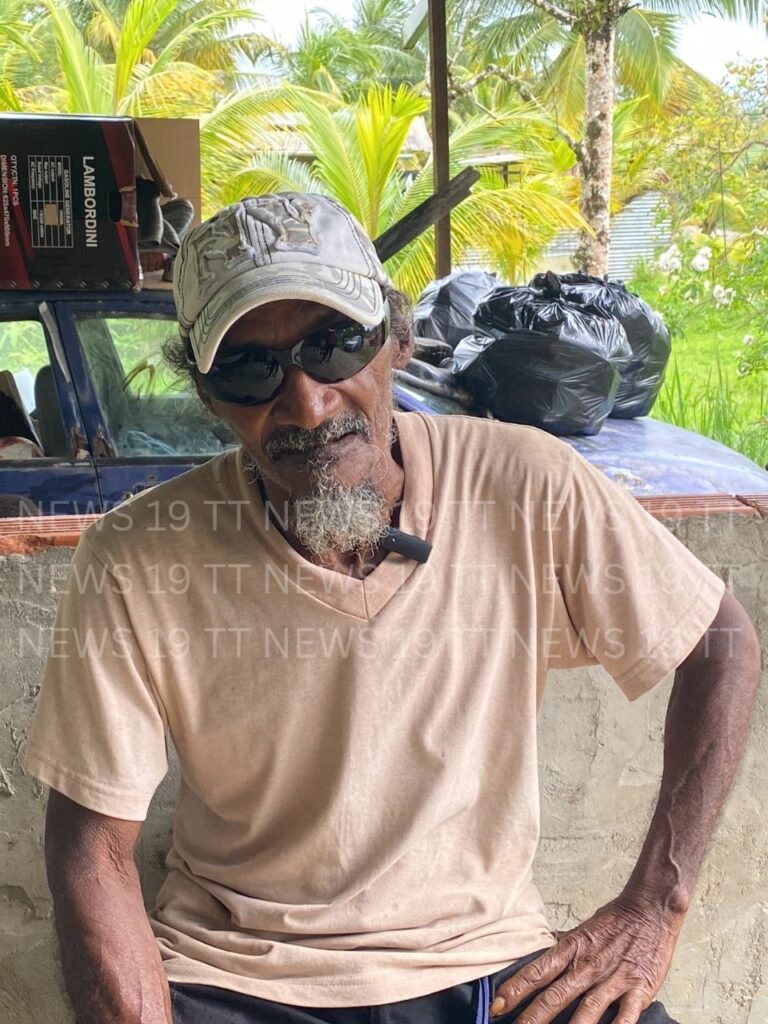
Another longtime resident Epharame Farfan said he has lived in the community in the late 1960s. He said he was the second person to move into the community, after Billal Mohammed.
Farfan said over the years, he has grown frustrated with the lack of response to the community’s pleas.
“I wasn’t even going to come here today (for the interview),” he said.
“I only come because they call me, I was home lie down on my bed.”
Farfan said he feels that the years of advocacy have yielded no results.
“Is always a set of talk, talk, talk and nobody doing nothing.”
Natalie Fraser, who moved to the community about six years ago after living in the US for a number of years, said life without a pipe-borne supply is difficult.
“I’m 63 years old and its a discomfort for myself, so could you imagine the discomfort of people with young children?” she asked.
Fraser said the residents are peaceful and keep the community clean.
“We’re not causing any trouble anywhere, why not have the amenities that everyone else has?
“I mean, you’re talking about five miles, maybe less and there’s people who have running water.”
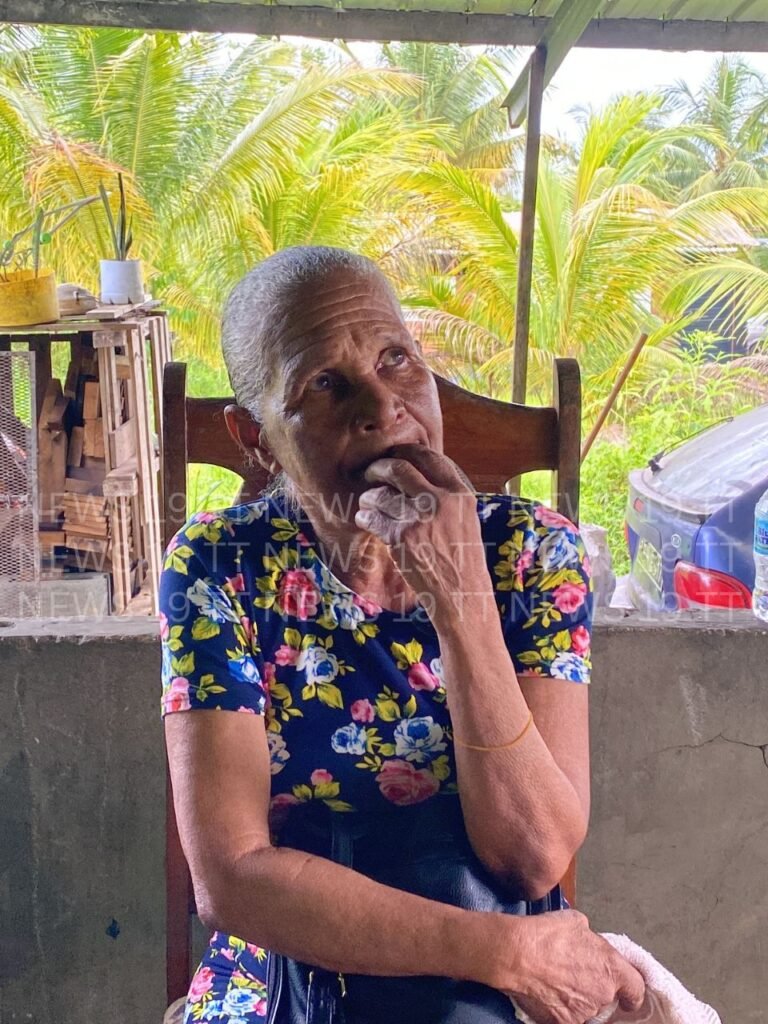
Patsy King, another longtime resident, lives in the community with her children, grandchildren and great grandchildren.
Like her neighbours, she too is appealing for water and electricity to be brought into the community.
“Please, we are begging.”
A paper trail, and silence
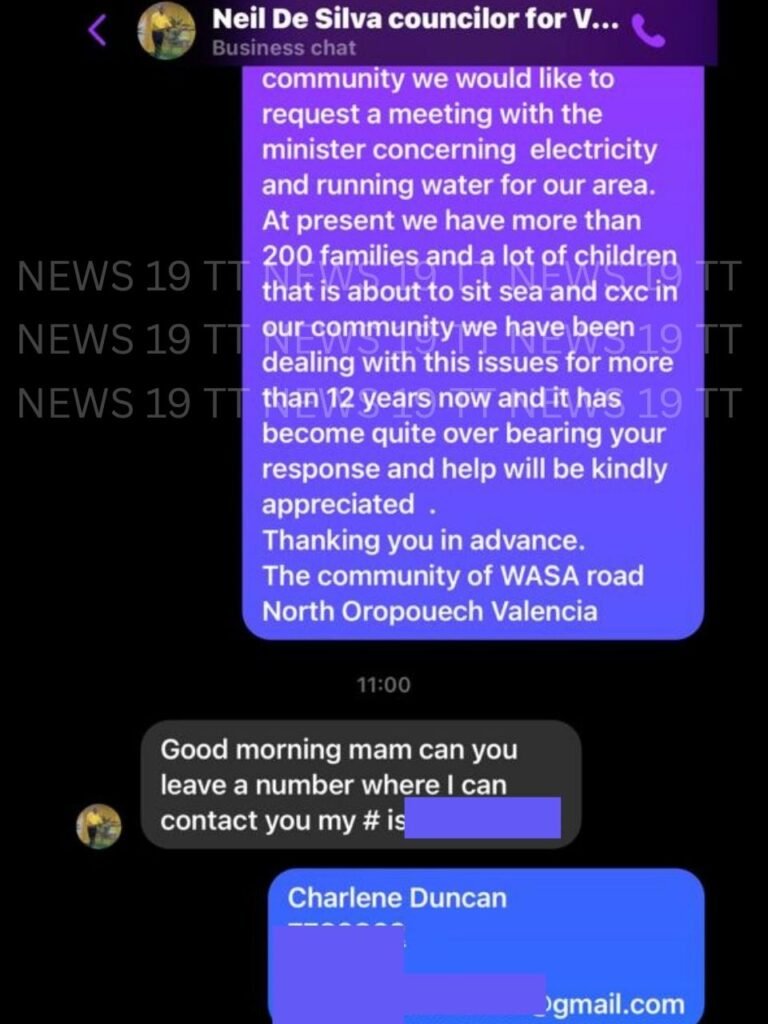
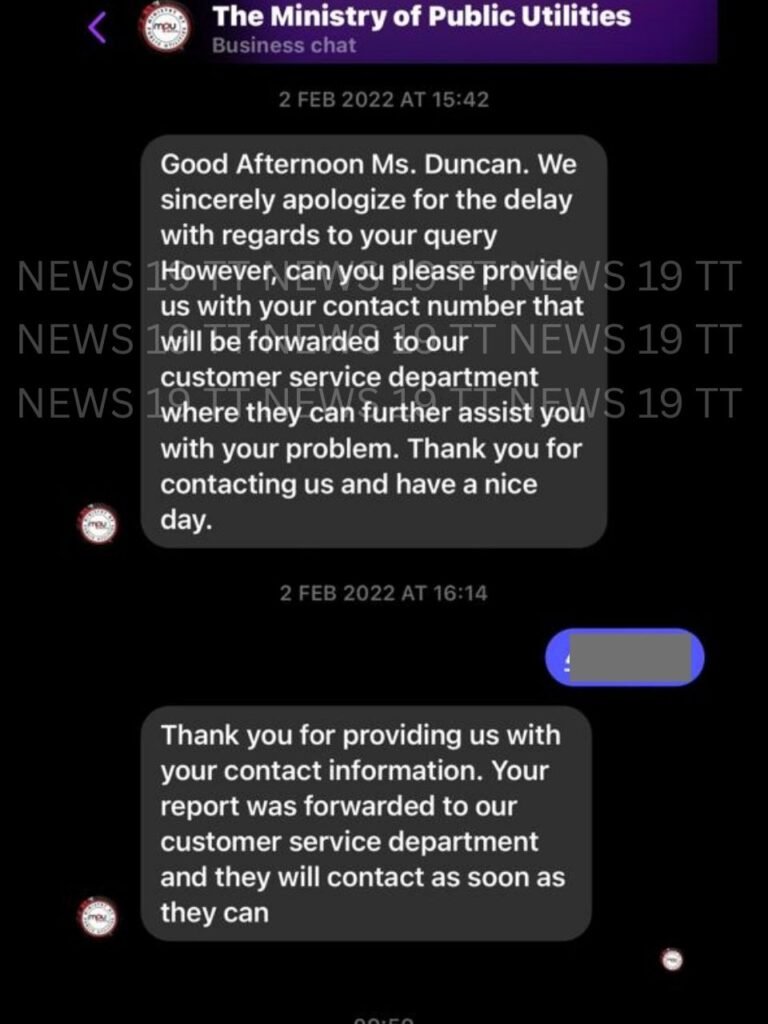
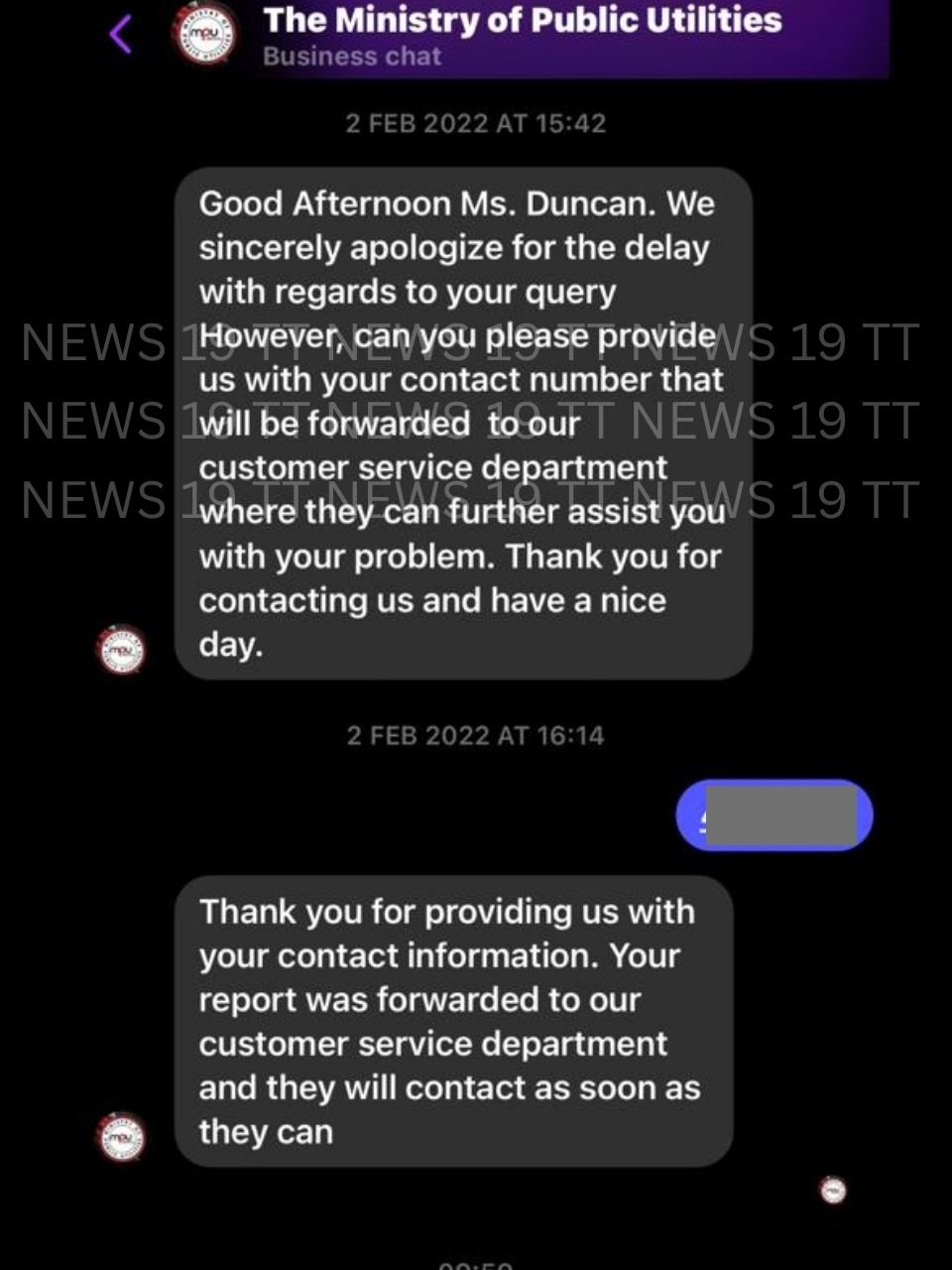
Charlene Peters, a member of the community group provided several screenshots with messages she sent to the Public Utilities Ministry on January 7, 2022.
On February 2, 2022, she got a response from the Ministry’s Facebook account.
She was asked to provide a contact number so a member of the Ministry’s customer service department could reach her. She sent the number but she says the call never came.
Another member of the group, Charlene Peters, sent messages via Facebook to councilor for the area, Neil De Silva. A screenshot of that conversation shows De Silva’s profile also requesting a contact number.
Attempts to contact De Silva by phone up until publication time were unsuccessful.
Former Public Utilities minister Marvin Gonzales told News 19 TT he does not recall the community’s plight. But Gonzales said the Valencia district has many squatting communities where families live without access to electricity and water because of land tenure issues.
News 19 TT reached out to Public Utilities Minister Barry Padarath on August 19 by phone and WhatsApp messages.
Up until publication time, we had received no response.
We also sent questions to Land and Legal Affairs Minister Saddam Hosein, asking whether the community was earmarked for regularisation by the Land Settlement Agency. Hosein responded, saying he would enquire but up until publication time, there was no response.
News 19 TT also tried contacting Toco/Sangre Grande Member of Parliament Wayne Sturge by phone and WhatsApp messages on August 21.
Up until publication time, we had received no response.
Of the four officials News19TT contacted for this story, only one responded. For a community that was told years ago its water had been “approved,” the silence is its own answer.