
This story was produced with the support of the Caribbean Energy Transition Reporting Initiative (CETRI).
Trinidad and Tobago sits 11 degrees north of the equator, swept by the northeast trade winds and bathed in abundant, year-round sunshine.
Under its international climate commitments, the twin-island republic has pledged to reach 30 per cent renewable power generation by 2030.
Yet a Climate Analytics Caribbean (CAC) report, assessing the country’s progress under the Paris Agreement’s Global Stocktake, a comprehensive review of global climate action conducted every five years, found the transition remains largely stuck on paper.
The report acknowledged the difficulty of that task: oil and gas account for roughly 40 per cent of T&T’s GDP and more than 80 per cent of its exports, making the shift to renewables both economically fraught and, as the report puts it, increasingly urgent as global markets decarbonise.
Beyond the high-level ministerial press releases, the path to solar adoption for ordinary citizens is blocked by a formidable combination of high capital costs, outdated laws, and a heavily subsidised fossil-fuel grid that distorts the economic reality of clean power.
To understand why the sun is not yet paying the bills, one must look past the high-level policy papers and examine the lived experiences of citizens, the practical, on-the-ground struggles of local solar installers, and the systemic, structural critiques of veteran policymakers.
The Human Cost: Off-Grid Desperation and Abandoned Dreams
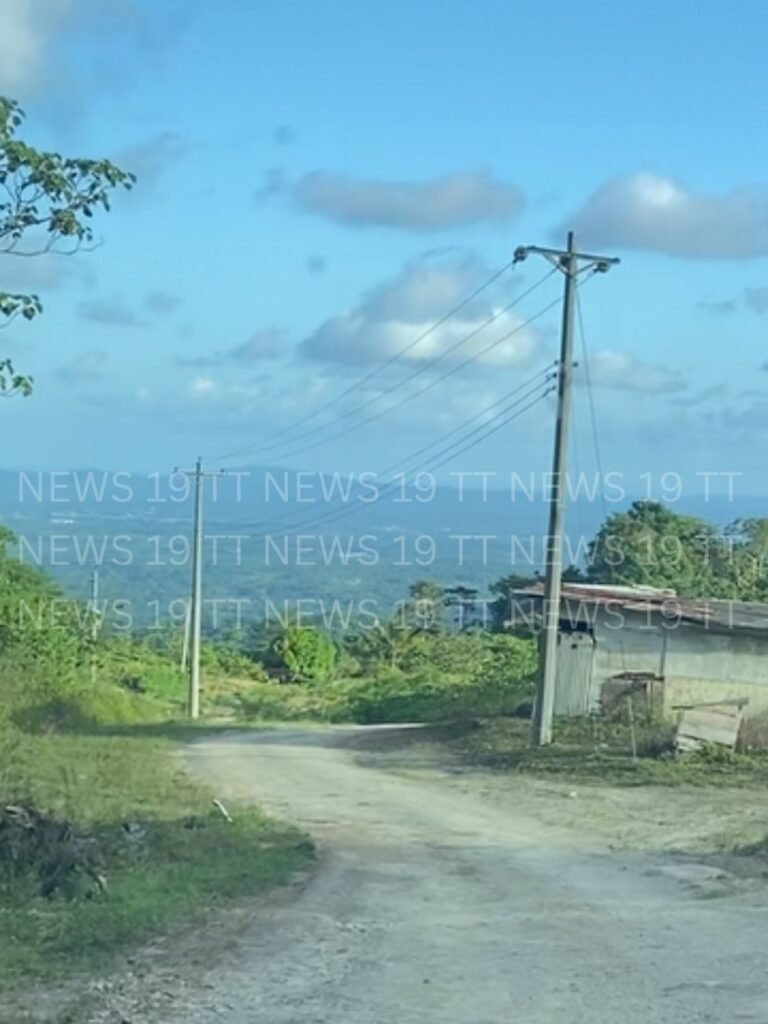
While state-level discussions remain frozen in legislative committees, the residents of Upper Cumaca, located miles off the Valencia Main Road in a dense rainforest, live in a different reality.
For these families, electricity is not a policy target; it is a luxury they have never possessed.
The Trinidad and Tobago Electricity Commission (T&TEC) grid, which powers the rest of Cumaca, stops abruptly just past the second quarry.
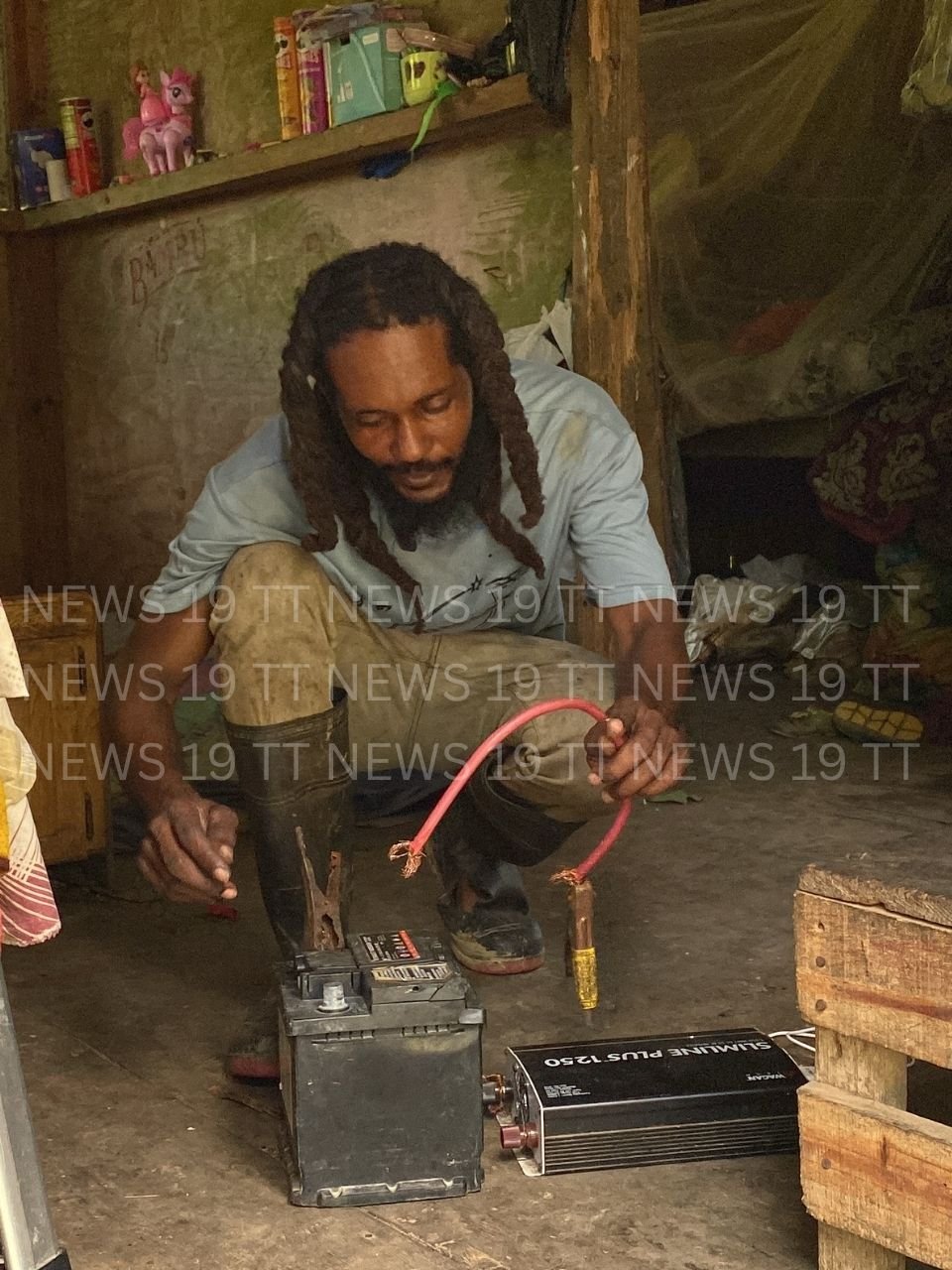
To reach where Richard Trancoso grew up and is now raising his five children, visitors must navigate over an hour of rough, unpaved roadways that frequently swallow two-wheel-drive vehicles, requiring Trancoso and his neighbors to stage rescues with their 4×4 vans.
“Up here is rainforest area so it does have more rain than sun,” Richard Trancoso explains.
As a young man, he used to hope that the national grid would eventually reach his home, but he has long since given up that dream.
To keep his children comfortable, Trancoso uses an inverter and his van’s battery to provide a few hours of light at night, but this constant heavy cycling has ruined the battery, creating an ongoing, expensive loop of replacement costs.
The tragedy is that this community was once a testing ground for clean energy.
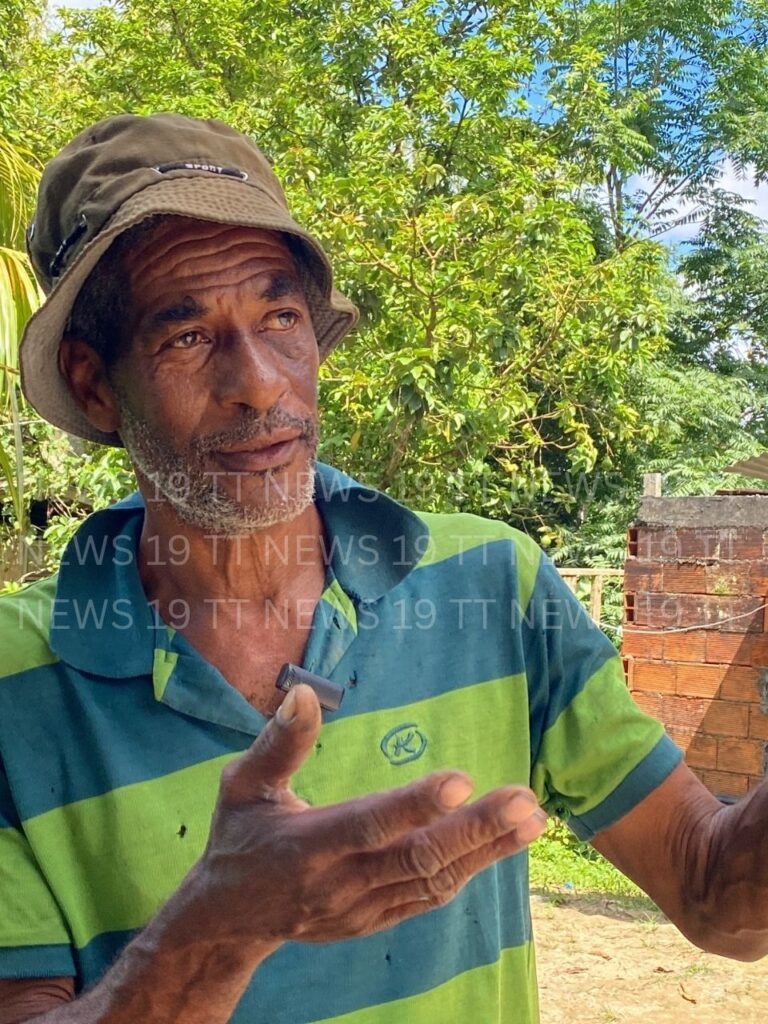
In 2004, Richard’s father, Keith Trancoso, was selected for a pilot project.
Trancoso recalled the sheer magic of that moment: “I wanted to see when night come and the lights come on and see the tv working…I was just amazed. It was like a game to me to see how it working…
“It was real different to have something to charge phone, use lights…the community up here used to bring devices to charge, sometimes a phone or a radio because that was the only current source at the time.”
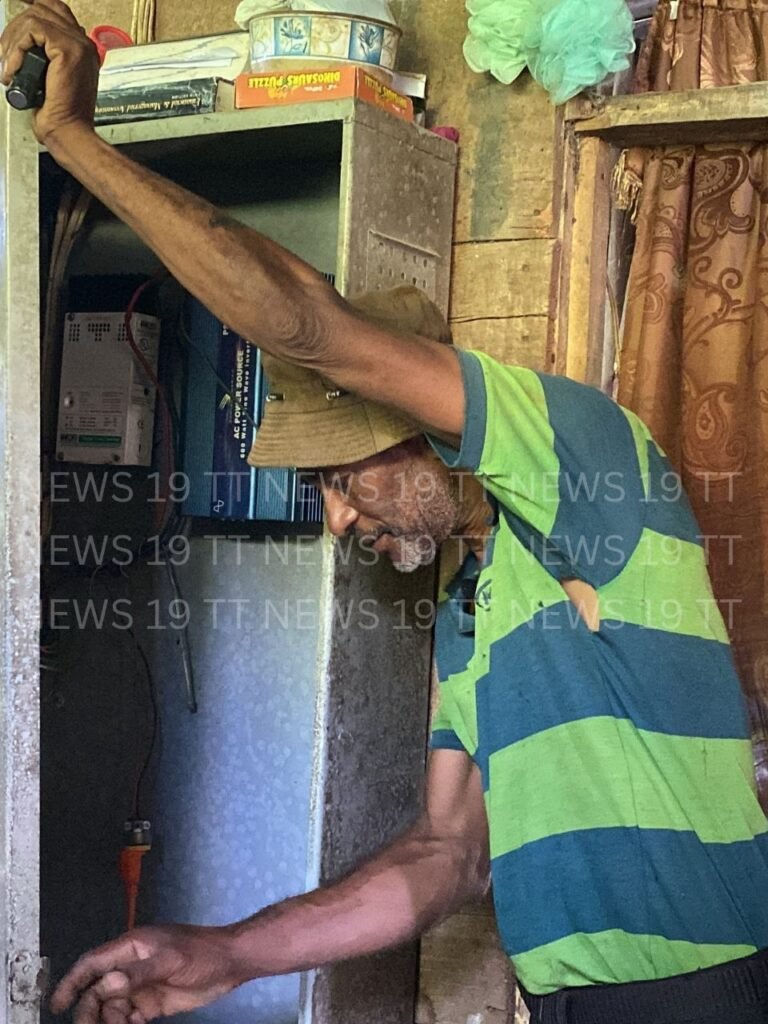
The project placed four solar panels on Keith’s tapia house and two storage batteries inside.
For a decade, the sun powered his home.
But around 2014, the batteries reached the end of their operational lifespan and died.
Unable to afford the massive replacement cost on his own, Keith and his tapia house fell back into darkness.
He tells News 19 TT his tapia house is falling apart and his money now goes to trying to construct a new home.
Keith believes that the government must step in to assist forgotten communities where traditional infrastructure cannot reach, bringing them “up-to-date”.
“Right now, everything so advanced. If the government could help us, the people in Cumaca, to get something done because everybody up here, we struggling for current.
“Once we have current, we could have we internet box and we could be in the game too. Right now, we outdated, and nobody don’t care about we.” Keith laments.
Miles away in another off-grid Valencia community, residents face a similar choice: spend exorbitant sums on solar or live in darkness.
One female resident, who asked to remain anonymous, spent nearly $50,000 to bring basic electricity to her home, financing the system entirely from her Cepep salary and her husband’s construction earnings .
“I have a big system, which cost $48,800, and that money I work Cepep and save to buy that system,” she explains.
“Its six big panels, helps to work my deep freeze, my radio and I also have a small fridge but I can’t put on everything at the same time, I have a washing machine and I also have a dryer.”
Yet even a system of this size, featuring six panels as big as a “motorcar” and two heavy batteries, is no match for the local weather.
“The solar cannot push all those things one time, when rain fall, I don’t really get the powerful current the way how it supposed to.
“Sometimes, when rain falling, it does go totally blank, so I does be having (to use) candles, having the lamp…” she says.
For this family, solar was not an eco-friendly lifestyle choice; it was a desperate last resort that drained their life savings.
“That money take me a long time to save up, I was working Cepep, my husband was working construction, it was real hard.
“If we had current, that money could have gone to something else, look we will retire just now and we don’t have anything put away,” she states.
If the grid power had been available, she would have never opted for solar.
Another neighbor in the same area was only able to afford a solar system because the supplier offered a deep personal discount.
“He tell me, ‘Mom, something about you, I can’t charge you the full price. I will charge you cost price,’” she recalled.
Her final bill came to just under $12,000. Like her neighbor, she struggles with solar’s unreliability during the rainy season and would have preferred a traditional connection.
“I would have probably buy a little generator for when current cut but not the solar, is really because I didn’t have any other choice.” she admits.
The Installer’s Reality: Prohibitive Costs and Logistical Gridlock
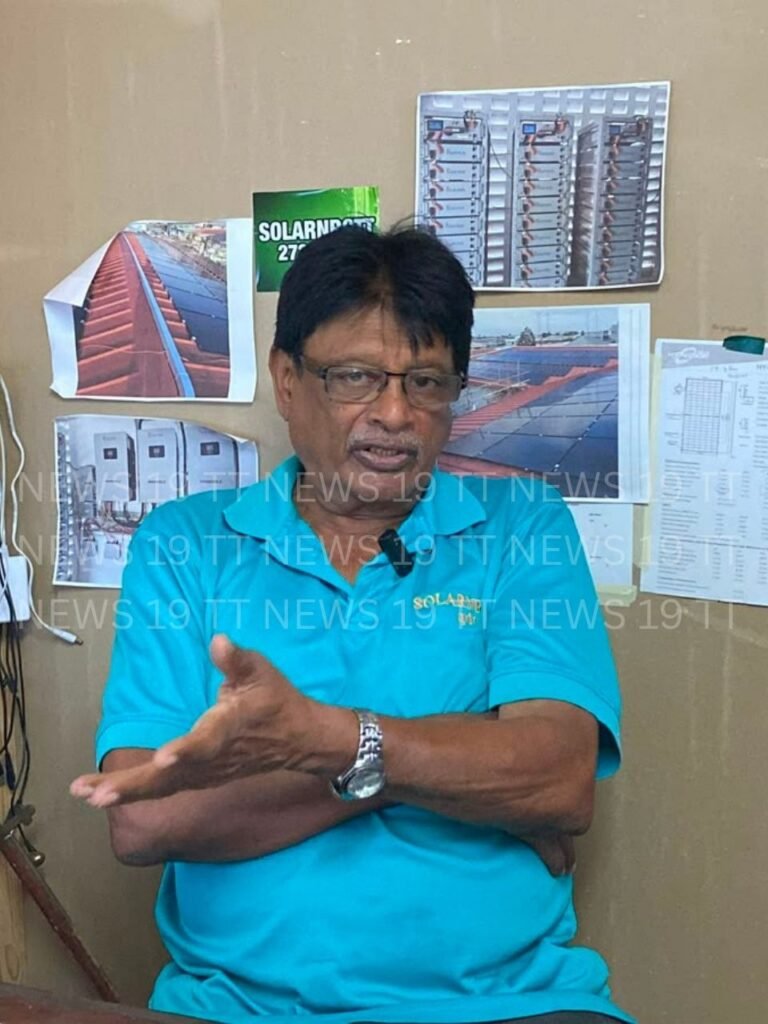
For Valmiki Ramsingh, owner of Solar NRG TT, the transition to renewable energy is technically straightforward but commercially punishing for the average household.
Ramsingh, who holds a master’s degree in renewable energy and boasts award-winning, state-certified commercial wind and solar installations, notes that the sticker price of reliable solar is the first major barrier.
To power a typical three-bedroom home, running three air conditioning units, standard appliances, a water pump, and computers, Ramsingh designs a robust 10kW “matrix” system comprising 25 panels and 16 batteries. The cost? Approximately $175,000 TTD.
A substantial portion of this cost is driven by the energy storage system.
While cheaper AGM or car batteries last only two years, Ramsingh refuses to install systems without high-end lithium-ion batteries, which cost between $8,000 and $10,000 each but offer a reliable 15-year lifespan.
Because of this steep price tag, solar remains an exclusive luxury for wealthy households and commercial clients.
“If you want peanuts you get monkeys, if you want a Rolls-Royce you pay for a Rolls-Royce,” Ramsingh warns.
He cautions strongly against cheap, substandard “DIY” systems sold for $15,000. He said these systems often fail within two to three years, leaving lower-income families with bad debt and useless hardware.
This affordability gap is worsened by a complete lack of adequate financing.
Ramsingh said a “triumvirate” of local credit unions offers dedicated solar loans, but these are capped at $45,000 TTD, only enough to purchase a substandard system that Ramsingh refuses to install.
Even for those who can afford the capital investment, installers are crippled by severe logistical bottlenecks.
Because 99 per cent of solar materials must be imported, the country’s chronic shortage of foreign exchange (forex) regularly halts operations. Ramsingh recounts waiting up to three months to start projects because he simply could not source the USD required to pay international suppliers.
Furthermore, while the government provides duty-free and VAT-free status for solar panels and inverters, he said this relief is inconsistently applied.
Crucial installation accessories, such as PV-certified wiring, racking clamps, and mounting brackets, are still subjected to customs duties, exposing installers to unexpected expenses at the port.
The Policy Maker’s View: The Missing “Enabling Environment”
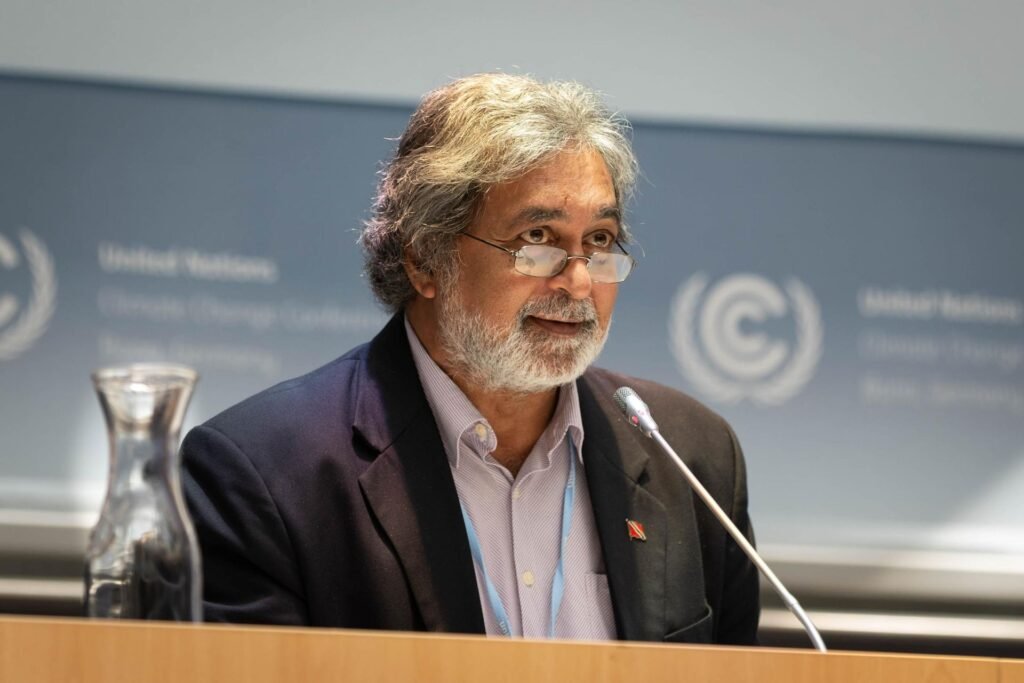
These practical, on-the-ground struggles align perfectly with the structural critiques of Kishan Kumarsingh, Trinidad and Tobago’s veteran climate policy expert.
Kumarsingh clarifies that his public advocacy is not a criticism of direct incentives like the VAT exemption, but rather a call to establish the necessary, multi-sector “enabling environment” required to make those incentives work.
Without harmonised policy, legislative, institutional, and administrative structures, he warns that even the most well-funded clean energy initiatives risk running afoul of outdated laws.
According to Kumarsingh, Trinidad and Tobago has glaring, unresolved gaps in its legislative and administrative structures that actively prevent clean energy from being deployed in a structured, legal manner.
The root of the regulatory gridlock lies in outdated, monopolistic statutes:
- The T&TEC Act and The RIC Act: Under current legislation, there are no legal provisions or technical standards for domestic residences or small businesses to generate renewable energy and feed it back into the national power grid. The system is built on a vertically integrated, “single-buyer” monopoly with the T&TEC acting as the sole off-taker.
- The 15-year Stagnation of the FIT: To make residential solar financially viable, the country needs a formal Feed-in-Tariff (FIT) policy. This would establish a legal framework and a standardised rate for homeowners to sell excess solar power back to the grid. Despite ten to 15 years of public consultations and technical assistance from the United Nations Development Programme, a FIT has never been adopted. Kumarsingh says the reasons likely include some combination of subsidised electricity making renewables uncompetitive, an incomplete legislative and policy framework, and a national grid that may not yet be able to accommodate the power it would generate.
- The Need for Smart Grids: A modernised grid is a technical prerequisite for residential solar. The current national grid is incapable of handling widespread, intermittent power from thousands of rooftop systems. The country requires “smart grids” to act as an intelligent web, balancing, absorbing, and rerouting power flowing from diverse renewable sources without threatening grid stability.
Without these modern legislative and grid upgrades, rooftop solar exists in a legal gray area. Currently, grid access is negotiated on a tedious, case-by-case basis with no codified, “plug-and-play” rules for ordinary citizens.
Silence from the Ministries: Unanswered Questions


While the technical and regulatory debate continues, the state’s leadership has remained silent on how these policies will translate into affordable, practical options for ordinary families.
News 19 TT sent a series of direct, detailed questions to both key ministers driving the transition: Minister of Energy and Energy Industries, Dr Roodal Moonilal, and Minister of Public Utilities, Barry Padarath. WhatsApp messages sent to both ministers on August 6, 2026, with follow-up messages on August 18, 2026, went unanswered, and numerous attempts to reach Minister Padarath by phone were unsuccessful.
The questions sent to the ministers, summarised below, targeted the key pressure points where high-level policy clashes with residential reality.
Questions summarised for the Minister of Energy and Energy Industries, Dr Roodal Moonilal:
- Enabling Legislation: The timeline for passing enabling legislation to grant residential users a legal right to grid-interconnection without case-by-case ministerial negotiation.
- Residential Tax Credits: Plans to expand direct tax credits (currently limited to solar water heaters) to cover solar PV panels and lithium-ion battery storage.
- Just Transition Grants: Whether savings from reduced domestic gas subsidies will be redirected into a grant fund to help low-income families afford solar installations.
- Battery Exemptions: Ensuring regulatory certainty by making the import duty exemption on lithium-ion batteries permanent beyond 2025.
- Licensing Red Tape: Introducing a simplified single-window digital application process for mandatory electricity generation licences.
Questions summarised for the Minister of Public Utilities, Barry Padarath:
- Technical Grid Standards: The release of codified grid connection guidelines under the Draft NEP 2026 to replace ad-hoc, case-by-case negotiations.
- Surcharges and Bill Shock: Protecting low-income families from proposed electricity surcharges and exempting households that already generate solar.
- Feed-in Tariff Equity: Ensuring cost-reflective feed-in rates that reflect actual household capital expenditure rather than arbitrary utility pricing.
- Decentralised Modernisation: Allocating funds from the July 2026 grid modernisation programme specifically for residential feed-in rather than utility-scale projects.
Neither ministry has provided answers on technical standards, social integration, or financial protection, leaving ordinary Trinidadians to navigate the transition without administrative guidance.
That silence reflects a deeper structural problem identified in the CAC report itself. Report author Kory Hall told a local media house that responsibility for the energy transition is scattered across multiple ministries and regulatory agencies, each operating within its own mandate.
“The overall process becomes burdensome and less attractive to project developers and investors,” Hall said, calling for “an empowered coordinating authority to ensure that projects don’t become trapped between institutions.”
With Energy and Public Utilities each declining to answer questions on their respective pieces of the puzzle, that coordination gap is playing out in real time.
The Subsidy Trap: The Illusion of “Cheap” Power
Both the installer and the policy maker agree on the single largest economic barrier to solar adoption: Trinidad and Tobago’s heavily subsidised electricity rates.
At approximately 31 cents TTD (roughly 3 cents US) per kilowatt-hour, local utility power is the cheapest in the Caribbean.
While this keeps domestic utility bills low, it completely destroys the financial incentive to switch to solar. Ramsingh advises that “anyone with a light bill over $2,000 a month should go into renewable energy”, but for the average household, the payback period on a $175,000 system is prohibitively long.
Ramsingh advocates for a blunt solution: “I would remove the subsidy… and that will force them into renewable energy.”
Kumarsingh reframes this subsidy trap, pointing out that subsidised electricity is an economic illusion.
“Someone pays for that subsidy, usually the taxpayer,” he explains.
The scale of that hidden cost is not small.
An Energy Chamber analysis calculated that between 2012 and 2015, Trinidad and Tobago forewent roughly US$1.5 billion in potential gas revenue by keeping electricity prices subsidised, an average of well over a hundred million US dollars a year. More recent industry estimates put the true, unsubsidised cost of electricity at more than double the subsidised rate.
Furthermore, traditional financial analyses completely omit the heavy environmental and social costs of fossil-fuel dependence, such as a high carbon footprint and respiratory healthcare costs.
Kumarsingh argues that if the state redirected these fossil-fuel subsidies toward supporting residential solar deployment, it would unlock massive, long-term socio-economic and environmental benefits for the entire country.
Conclusion: The Silent Giant of Brechin Castle and the Math of the 2030 Goal
Trinidad and Tobago’s current renewable strategy is highly top-heavy, focusing almost entirely on state-led, industrial-scale projects.
The crown jewel of this strategy was intended to be the landmark Brechin Castle Solar project in Couva, jointly owned by bpTT (35 per cent), Shell (35 per cent), and the National Gas Company (30 per cent).
The project’s 112MW nameplate capacity spans two sites, Brechin Castle and Orange Grove; once fully commissioned, it was expected to deliver up to 92.2MW into the national grid.
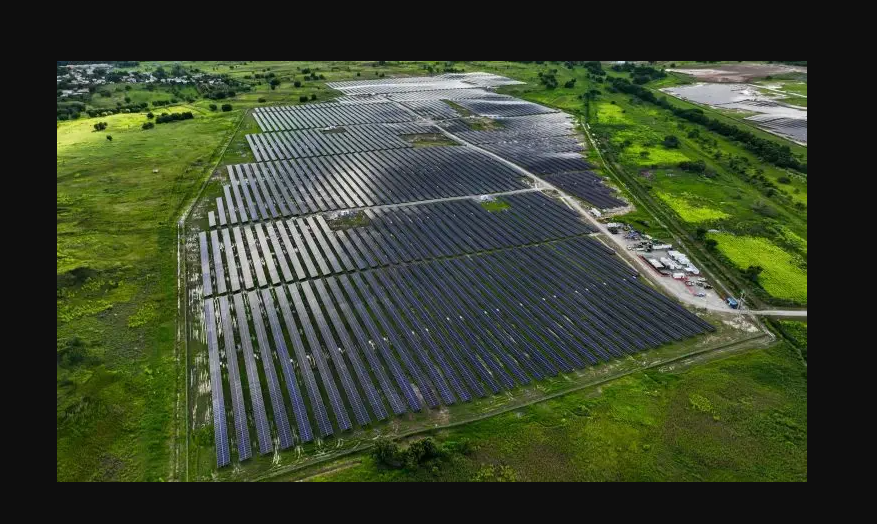
Promoted as a historic milestone capable of supplying approximately eight per cent of T&T’s electricity generation and saving 123,000 tonnes of carbon dioxide emissions annually, equivalent to taking more than 26,500 cars off the road, Brechin Castle was part of a combined US$100 million investment across both solar sites, designed to mark the beginning of the nation’s green transition
Yet, the flagship project has instead exposed the severe operational and contractual challenges of coming online before supporting grid infrastructure and commercial arrangements are ready.
Despite achieving “first electrons” on July 17, 2025, Public Utilities Minister Barry Padarath confirmed that T&TEC is not absorbing any power from the solar farm. In fact, the plant is currently producing zero electricity, having gone completely off the grid at the end of January 2026.
The root of this systemic failure lies in the exact “subsidy trap” identified by Kumarsingh.
Because T&TEC purchases gas-fired electricity from Independent Power Producers at a subsidised rate of about $0.05 per kilowatt-hour, Brechin Castle’s solar contract rate of roughly $0.09 per kilowatt-hour is nearly double the cost of subsidised fossil-fuel generation.
T&TEC has relied on provisions within its contractual arrangements allowing it to decline taking the solar power to protect its operational balance sheet.
Furthermore, because the solar farm was never designed with battery storage, any power it produces cannot be retained and is lost.
This leaves the country’s largest clean-energy asset locked out by the very fossil-fuel subsidies meant to keep electricity cheap.
With the 92.2MW Brechin Castle plant sidelined, the path to the nation’s 30 per cent renewable target by 2030 is even more precarious.
Even if the plant were fully operational, its capacity would cover only a fraction of what’s needed.
Kumarsingh puts the figure at eight to ten per cent, citing Energy Chamber estimates, while a separate newspaper report puts it at up to eight per cent.
Kumarsingh says that without a massive expansion of renewable power, including wind, not just solar, the 30 per cent target will be difficult to reach, and utility-scale plants alone would not close the gap.
The transition mathematically requires ordinary homeowners and small businesses to become active producers of clean energy.
“Contributions from residential and small commercial installations would add-up to contribute to the total RE (renewable energy) capacity, while at the same time save customers money,” Kumarsingh emphasises.
The Draft National Electricity Policy (NEP) 2026 proposes major structural reforms, including a transition from the single-buyer model toward competitive market mechanisms and cost-reflective tariffs.
But until these drafts are finalised, outdated laws are modernised, and affordable financing is established, the average citizen will remain locked out.
To lower the high capital costs of solar hardware, Trinidad and Tobago must also look outward.
Rueanna Haynes, director of Climate Analytics Caribbean, which produced the report, warns that policymakers may be viewing the transition through a “purely nationalistic lens,” a mistake that could make the transition seem harder, more expensive and less beneficial than it actually is. She points to existing regional bodies like CCREEE (the Caribbean Centre for Renewable Energy and Energy Efficiency) as a foundation for deeper cooperation: shared, scaled procurement could lower the unit cost of solar panels and batteries, making clean energy more attainable for ordinary Caribbean families.
Until then, the wind and sun will remain free, but the legal and financial right to capture them will remain out of reach for the ordinary Trinidadian.