


Reporters Without Borders (RSF) has raised concerns over the Trinidad and Tobago government’s ongoing suspension of public advertising contracts with local news outlets, warning that the policy is deepening financial strain on the country’s independent media.
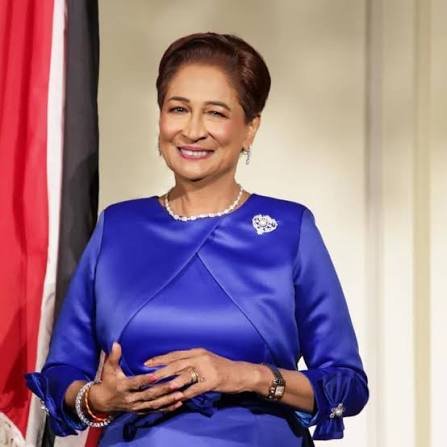
The suspension has been in place since May 2025, when Prime Minister Kamla Persad-Bissessar placed all government ministry and state enterprise advertising, across broadcast, print and digital platforms, on hold as part of a wider cost-cutting drive. At the time, the Prime Minister cited an estimated $4.42 billion deficit for May 2025 and a projected $11 billion deficit for the year.
Since the policy took effect, Trinidad and Tobago has gone from three national newspapers to two. The Trinidad and Tobago Newsday, which had operated for more than 32 years, ceased publication in January 2026 after its parent company, Daily News Limited, petitioned the High Court to wind up operations. The company pointed to collapsing print advertising revenue, rising production costs and broader structural shifts in the media industry, describing the closure as the result of a “perfect storm.”
Five months later, Caribbean Communications Network, publisher of the Trinidad Express, announced a restructuring exercise that included layoffs. The company informed the Banking, Insurance and General Workers Union that its editorial staff would be reduced from 33 members to 26.
RSF North America Executive Director Clayton Weimers said the loss of government advertising revenue carries consequences that go well beyond newsroom finances.
“Withholding a major source of advertising revenue will have consequences that extend far beyond newsroom balance sheets,” Weimers said, adding that a strong news media ecosystem has consistently been linked to stronger economic performance.
Trinidad and Tobago currently ranks 32nd out of 180 countries in RSF’s 2026 World Press Freedom Index, placing it among the better-performing nations in the Caribbean on press freedom. Weimers said it was “deeply regrettable” to see policy decisions threaten that standing, and called on government to reverse course, ensure any changes to state advertising allocation are made transparently and in consultation with media stakeholders, and support outlets in transitioning to more sustainable financing models.
According to journalists and media association members interviewed by RSF, the true scale of government advertising spending is difficult to determine, since individual ministries, state agencies and government-owned enterprises purchase advertising independently, with no centralised public accounting of the expenditure.
Trinidad and Tobago Publishers and Broadcasters Association president Douglas Wilson has separately warned that withdrawing government advertising could have serious consequences for the country’s media landscape. Wilson told the Trinidad Express that government advertising had already declined by more than 50 percent in recent years, though that figure remains difficult to independently verify.
Journalists who spoke to RSF, on condition of anonymity, said the impact goes beyond the loss of individual outlets, describing shrinking newsroom resources as a growing barrier to investigative reporting and coverage of underserved communities.
Newsday’s former editor-in-chief, Judy Raymond, told the Associated Press the closures represent a loss for the country’s democracy.
“That is definitely a loss to the country, to our democracy, where, particularly in this age of social media, credible professional media houses are needed more than ever,” Raymond said.
The pressures facing Trinidad and Tobago’s media reflect a wider regional pattern. RSF noted that Newsday’s closure was followed the collapse of Guyana’s Stabroek News in March 2026, another independent newspaper known for investigative work, pointing to mounting economic pressure on independent journalism across the Caribbean. RSF has previously warned that this financial strain leaves the region’s media landscape more vulnerable to propaganda and foreign influence, including from the Chinese state.
RSF’s index continues to identify economic fragility as one of the central threats to independent journalism worldwide, warning that financially weakened newsrooms are increasingly unable to fulfil their role as a democratic watchdog.